
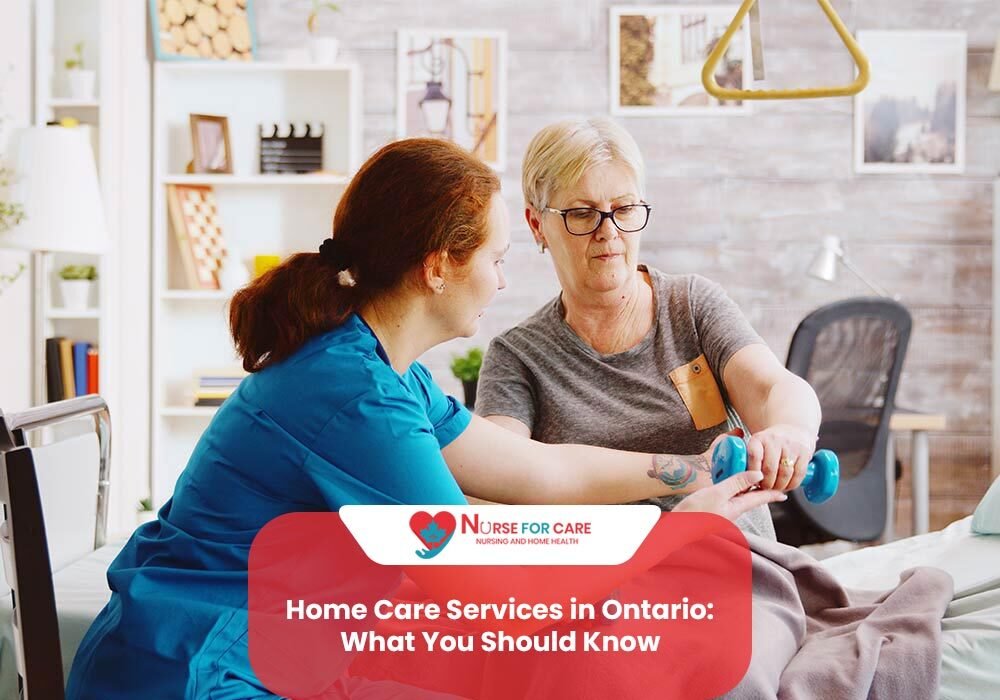
Home Care Services in Ontario: What You Should Know
Table of Contents
Providing home care services in Ontario isn’t just about convenience; it’s about dignity, independence, comfort, and sometimes a lot of peace of mind-yes, even the kind you find in a good cup of tea on a lazy afternoon.
If you or someone dear is considering in-home care, then continue reading as this article tries to guide you through how home health care services work in Ontario, the kinds of care available, why demand is rising, and what to check when hiring private services like ours at Nurse for Care.
What does home care services really mean?
When we refer to home care services-sometimes called home health care services, home support services, or private nursing care-we are referring to a wide spectrum of care and support that takes place in-you guessed it-your home.
According to the provincial government’s guideline home and community care services in Ontario include nursing care, personal support (assistance with bathing, dressing, and meals), rehabilitation services (like physiotherapy), homemaker assistance in housekeeping or shopping, among other things.
Its objective is to help people remain independent for as long as possible, even with chronic conditions or disabilities, or after staying in the hospital.
In short, it is to enable comfort and quality of life at home-and avoid unnecessary hospital stays or long-term care. Let’s face it, nobody is signing up for these facilities unless they absolutely have to.
Who uses home care in Ontario - and why demand is rising?
Ontario’s home care system is large but also growing rapidly. We have some important statistics shown by the government of Ontario:
| Study Metric | Study period | Latest Projection |
|---|---|---|
| Patients served by Ontario’s publicly-coordinated home care | 2023-2024 | 651,850 |
| PSW hours delivered | 2023-2024 | 36,708,050 hours |
| Nursing visits delivered | 2023-2024 | 10,033,850 visits |
| Total annual home & community care hours (public and family-funded) across Ontario | 2024 | 58 million hours |
| Estimated seniors (65+) in Ontario | 2024 | 3.0 million (18.3% of population) |
| Projected seniors (65+) by 2051 | 2024 | 4.6 million (22.4% of population) |
| Projected 75+ population by 2051 | 2024 | 2.7 million (from 1.3 million in 2024) |
Government-funded home care reaches hundreds of thousands of clients every year. Some estimates put the number of recipients of publicly funded home care at approximately 667,000 people annually.
Added to privately purchased services-used when people “hire home health” privately-the total number of Ontarians receiving home care is even greater.
The demand is increasing. Ontario is anticipating a 20 % overall population growth between 2022 and 2032 — but the 65+ population is anticipated to increase by 34%, and the 75+ population by 48%.
What does this mean? More seniors, more chronic disease, more people needing private nurse services, nurse services (RPN), PSW services or daily living assistance.
Why now, more than ever, home care matters?
It supports individuals in transitioning from a hospital or recovering from surgery.
It keeps those with chronic conditions or disabilities in familiar surroundings – home, where comfort and independence may improve the quality of life.
It relieves pressure on hospitals and long-term care facilities, helping to keep the health care system sustainable. As one recent analysis of the sector warned, without enough home care staff, rising waitlists and overburdened facilities could become the norm.
Types of Home Care Services: What's Out There
Depending on your needs, home care in Ontario can look very different. Here are the main categories:
Nursing & Medical Services
If you require medical supervision – wound care, medication management, post-surgery care – either private nurse services or publicly-funded nursing visits can assist. “Nurse services (RPN)” or registered nurse care brings hospital-level or transitional care into your living room.
Indicated for: post-surgery recovery, chronic ailments, terminal care, medication management, dressing of wounds, among others.
Personal Support & Assistance with Daily Living
Need assistance in completing daily basic activities? That’s where personal support worker services come in. PSWs assist in bathing, dressing, eating, mobility, and toileting tasks that many of us take for granted.
This kind of support is sometimes referred to as daily living assistance, and it’s one of the primary parts of home care for seniors or persons with disabilities.
Homemaking & Foot-to-Floor Assistance
Home care isn’t just about medical or physical support. Many services are provided, such as cleaning, laundry, shopping, meal preparation, light housekeeping, and in some cases, even foot care or skin care, if required.
If you live alone or just want help with the “less fun but necessary” chores, this falls under home support services or home help services.
Specialized & Senior Care
Specialized care services meet the needs of residents diagnosed with dementia, Alzheimer’s disease, or those requiring ongoing support with limited mobility or various complex health conditions. Services include memory care, chronic disease management, physio/occupational therapy, speech therapy, or mobility and rehabilitation therapy.
Private-Pay Home Care
While many home care services in Ontario are publicly funded through what is now called Ontario Health at Home.
It’s also possible to hire private home care agencies. This gives you greater flexibility, more choice over caregivers, scheduling, and often quicker access.
In that case, if you are looking into private nursing care, PSW services, or private nurse services, then private pay or mixed funding is the route for you.
Why are more People and their families opting for Home Care?
Let’s face it: hospitals and long-term care homes are expensive, often overwhelmed, and not always the most comfortable place to recover. Which is why home care has become appealing – and not only to seniors.
- Comfort & independence – Being cared for at home means familiar surroundings, pets, favourite meals, and the dignity of living as you wish.
- Avoiding institutionalization – Not everyone needs to go into a nursing home but still needs support. Home care bridges that gap.
- Convenience in post-surgical or rehabilitation settings – Many patients directly benefit from nursing or PSW visits right after a hospital stay or surgery.
- Flexibility & personalisation – through private pay or self-directed care, you can tailor services to your lifestyle and budget.
- Supporting caregivers – Many families balance caregiving with other responsibilities. Home care provides relief so family and loved ones do not burn out.
As recent statistics show, home care in Ontario supports hundreds of thousands of clients every year; this underlines just how important and in demand these services are.

How to Choose Private Home Care Services?
If you decide to go the private route (or even as a supplement to public care), choosing a trustworthy provider is crucial. Here are key factors to check when hiring private home health or home care services:
- Credentials & licensing – Ensure staff are licensed (RPNs, registered nurses, PSWs) and trained.
- Credentials & licensing – Ensure staff (RPNs, registered nurses, PSWs) are licensed and trained.
- Range of services – Do they offer what you need? Regular personal care, nursing, foot care, specialized senior care, daily living assistance? At Nurse for Care, we offer a full suite including PSW services, private nurse services, senior care, foot-care, and more. Check our services .
- Flexibility & custom care plan – Your needs might change (recovery, mobility, end-of-life care). Choose providers who adapt.
- Clear pricing transparency – Know what’s included, hourly or package rates, extra charges. For our rates, see our prices page.
- Reliable scheduling & availability – Especially if you need 24-hour care, or frequent visits.
- Good communication & caregiver match – Respectful staff, familiarity with your preferences, clear communication matter more than you might expect.
If you are curious about our packages, including PSW services or private nurse services, check out our detailed PSW services page and private nurse services page.
How much does home care cost in Ontario today?
Home care services in Ontario have flexible pricing, depending on the kind of support that is required for your family. At 2025, PSW services across Ontario generally range from $32-$45 per hour, while private nursing care (RPN/RN) usually runs from $60-$120 per hour. Overnight and extended care will vary depending on the level of assistance one needs.
For families seeking a detailed explanation of our current rates, packages, or tailored support options, we encourage them to go through our home care plans and pricing, as well as our full list of services, for the most accurate and updated information.
Public vs Private: How Ontario's System Works?
The home care system in Ontario blends public funding – via Ontario Health at Home – with private or family – funded services:
- Publicly funded care supports many individuals who meet the qualification based on assessed needs. Ontario Health at Home coordinates care and creates custom care plans.
- Private home care fills gaps: faster access, more flexibility, services not covered publicly for people who prefer private pay.
This hybrid approach works to balance affordability, access, and quality – but Ontario’s growing demand is putting pressure on the system. Recent data shows thousands more PSWs are needed to maintain current service levels as Ontario continues to age.
For someone requiring ongoing, personalized care, particularly after surgery or when chronically ill, private services can provide a level of reliability and comfort that an often-overstretched public service cannot always promise.
How Home Care Services fit into a Bigger Care Ecosystem?
Home care does not exist in a vacuum; it is part of a wider health and community care system. Here’s how it interfaces with other models of care:
- Prevention & Chronic Disease Management: Home care helps in the management of chronic conditions and limits hospital readmissions, hence improving long-term health outcomes.
- Caregiver support: Many Ontarians provide informal/unpaid care to family members. Home support services reduce burden and enhance the quality of life for both caregivers and recipients alike.
- Smoothing transitions from hospital to home: Home health care services bridge the recovery process after discharge with nursing visits, rehab, and medication support far better than remaining in the hospital.
- Senior-first: As more people prefer to age at home, home care becomes a cornerstone for dignified, independent senior living.
Why Home Care Services in Ontario is the future
You might wonder, with all talk about hospitals, long-term care homes, and health budgets — is home care just another option, or the future?
Data strongly suggests the latter. As the 65+ population surges over the next decade, demand for home care services will balloon. Some projections show a need for thousands more PSWs just to maintain existing service levels.
In other words, home care in Ontario isn’t optional; it’s essential. It’s personal. And whether publicly or privately funded, or a combination of both, it’s becoming the backbone of senior care, rehabilitation, post-op recovery — and peace of mind for families.
What That Means for you or your loved ones
If you are exploring home care for yourself or a loved one – or simply planning ahead – here’s a quick checklist that may help:
- Assess the level of care required: basic assistance with daily living, medical supervision, special senior care, or any combination.
- Decide between public home care (through Ontario Health atHome) which involves assessments and eligibility, or private agency care for more flexibility.
- Decide between public home care (through Ontario Health atHome) – which involves assessments and eligibility – or private agency care for more flexibility.
- Find a provider with full-spectrum service offerings: PSW services, private nurse services, foot care, specialized senior care, homemaking, etc.
- Confirm transparent pricing, scheduling flexibility, and caregiver professionalism.
- Ensure that care plans are able to change over time, as needs may change, regarding health, mobility, and recovery.
Why Nurse for Care Services Fit the Bill
At Nurse for Care, we understand how important it is to combine professional care with empathy and flexibility. We offer: PSW services, private nursing care, daily living assistance, specialized senior care, foot care services, and private nurse services (RPN/registered nurse) — whether you need occasional help, 24-hour support, or post-surgery nursing.
Check out our full range of Home Care services in Ontario. Interested in rates or want to see if we operate in your area? Reach out to us for full details.
With us, you get more than just care — you get peace of mind.
Final Thoughts
Home care services – whether called home health care, home support services, or private nursing care – are more than a trend. In Ontario, they’re an essential part of modern health care and community living.
With a growing senior population, increased demand, and a desire for dignity and independence, home care is changing the way people age, recover, and live.
If you or a loved one are exploring home care options – or are already receiving care – take your time. Choose wisely. Ask questions. Ensure transparency. And pick a provider that combines professionalism with compassion (yes, we think we fit that description — but we encourage you to check around).
After all, home is where comfort, safety, and peace matter the most.
FAQ
How much does home care cost per hour in Ontario?
In 2025, the average cost for private home care in Greater Toronto Area, including Scarborough, ranges between $22 to $45 depending on the level of care required
Is there free home care in Ontario?
Yes government – funded home care is available to eligible Ontario residents for free. Ontario Helath at Home coordinates this free,publicly-funded care which covers necessary services like nursing and personal support, but for more flexible scheduling,like more hours or specialized services, private home care is the essential solution.
Does ohip cover home care?
No, OHIP does not directly cover home care expenses, but it is the foundation for accessing free, government-funded services coordinated by Ontario Health atHome. However most families use a combination of public funding and private-pay services.
How to get home care in Ontario?
The process of acquiring home care in Ontario depends on whether you seek private or government-funded care. If you want government care in Ontario, you must contact Ontario Health atHome whereas if you want private home care in Ontario you can call any private care home for consultation and look into their service plan and pricing